Word to the Wise: Why I Left Etsy.
Back in the early days of Etsy, I had an account selling my handmade cross stitches. I had a good experience using the site and sold quite a few items. Because cross stitch is such a slow and laborious process, I never had a huge amount of inventory, so my sales were relatively low compared to other shops, but I was happy with what I was doing. There came a time, however, when I stopped making cross stitches and left the site for many years.
In November of 2024, I decided to start up a new account selling my photography. By this time, a lot had changed on the site. I met with an “Etsy expert” who helped guide me through the intricacies of SEO and getting your shop noticed. I felt I had a strong handle on the right way to run my Etsy store and was optimistic about my future success.
Then, on January 1, 2026, I shut my S Lawhorne Photography Etsy shop down.
What went wrong?
There are several reasons why I chose to leave Etsy. Let’s break it down.
Fees.
I’ve seen a lot of artists boycott Etsy due to their ever-increasing fee structure. When I would create my listings, I would be discouraged from charging accurate shipping prices, and encouraged to offer free shipping or a very low flat rate. On all the items I sold, I found that after I paid the shipping costs, listing fees, transaction fees, shipping fees (an additional fee which you pay on money you collect for shipping), and processing fees, Etsy was taking about 30% of my sale every time. Though this seemed high, I reminded myself that selling at a gallery would result in anywhere from a 30-50% commission being taken. In that light, paying 30% in fees was tolerable. But that’s not all.
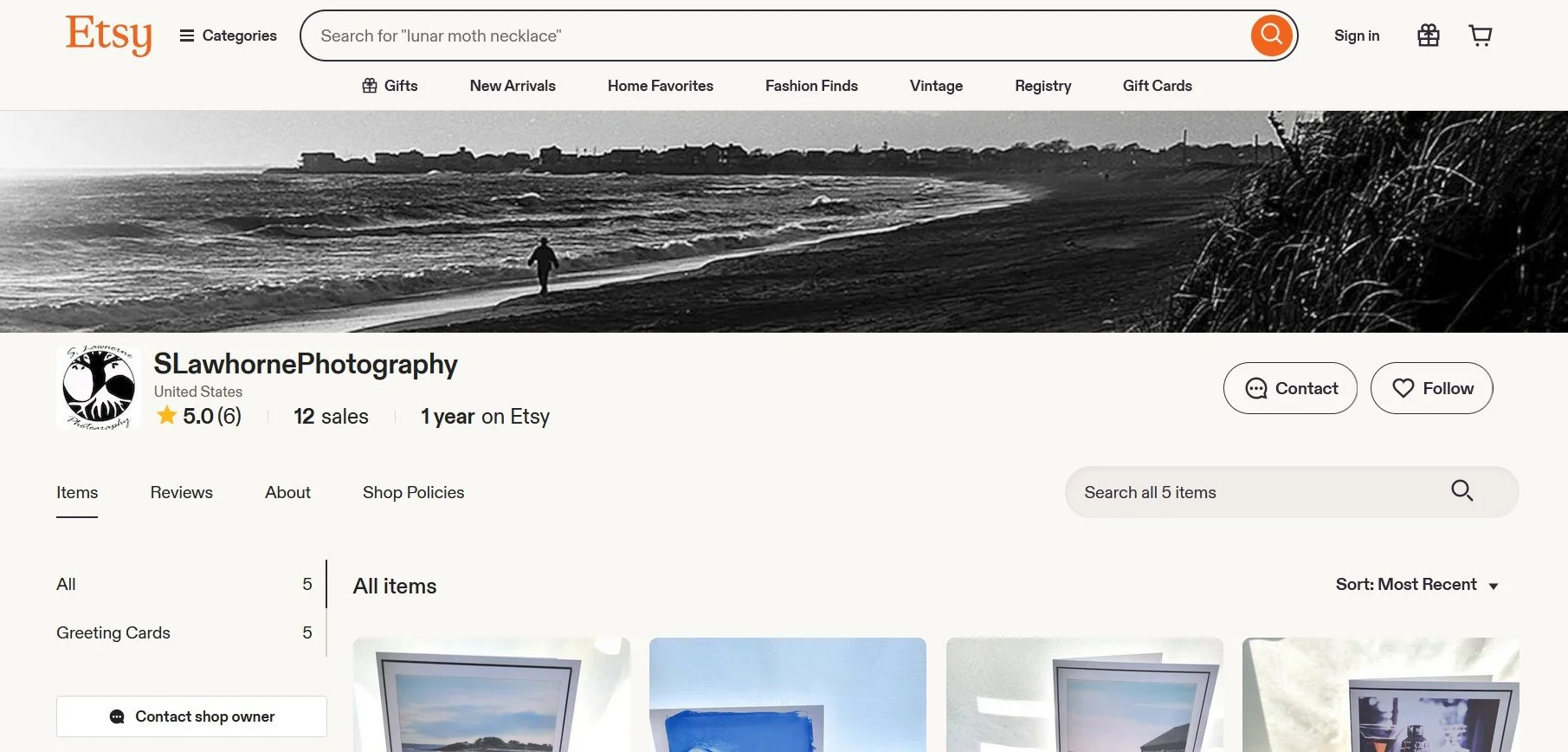
A screenshot of my shop shortly before I dismantled it.
Competition.
Etsy is used by millions of people every day who are shopping for unique, handcrafted, or vintage items. Its success is a double-edged sword. On the one hand, the popularity of the site offers the promise of lots of sales. But on the other hand, there are not only millions of buyers, there are also millions of other sellers trying to get their products noticed.
The competition is fierce. In an effort to make more sales, most sellers seem to underprice their items. As an example in the art category: an original cyanotype that I might sell for $70 would be listed with a $15 price tag by another seller. How am I supposed to sell my artwork if it looks so relatively overpriced? Even the Etsy expert told me I was charging too much. But I was unwilling to sell my work for those low prices. And if I had cut my prices, here’s the thing: when you factor in the Etsy fees with the cost of making the work, selling it for so cheap would have meant I was actually losing money. That is no way to operate a business.
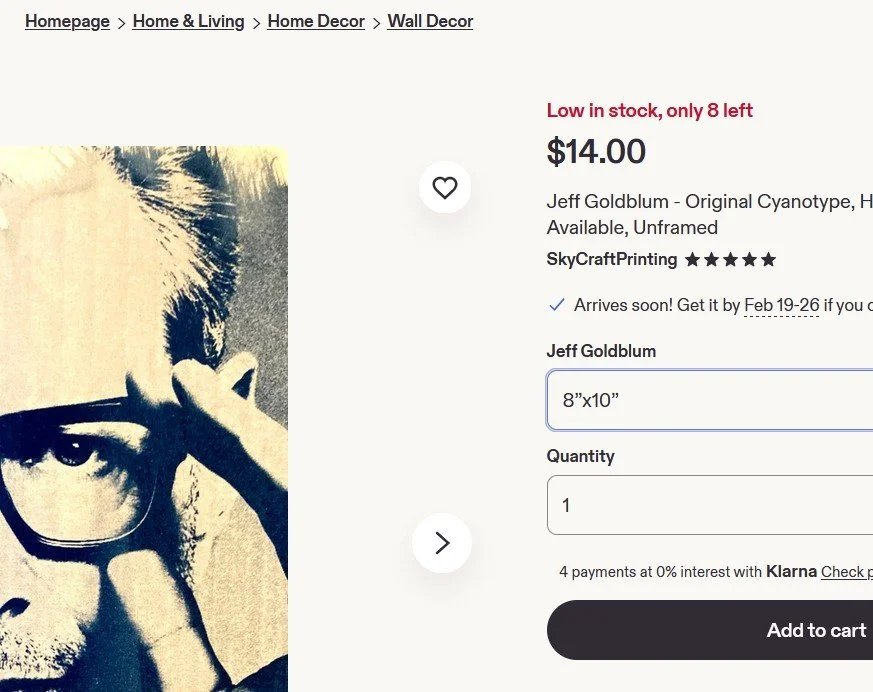
An example of work that should be priced higher.
Not only that, but with all the competition, it’s hard to even get found on the site. To check my SEO, I would regularly open Etsy in a browser that wasn’t logged into my account and run organic searches of keywords that should have resulted in my products being shown. I would also occasionally ask my friends to try to find me without searching for my username. The result? Many times, my work was nowhere to be seen in the search listings. They were crowded with promoted listings, cheap items, and even some fake AI scams. If I did find one of my pieces, it would be deep in the search results on some high-numbered page. It was rare to find my listings on the first couple of pages. And I was using sites like erank.com every single day to try to improve my SEO!
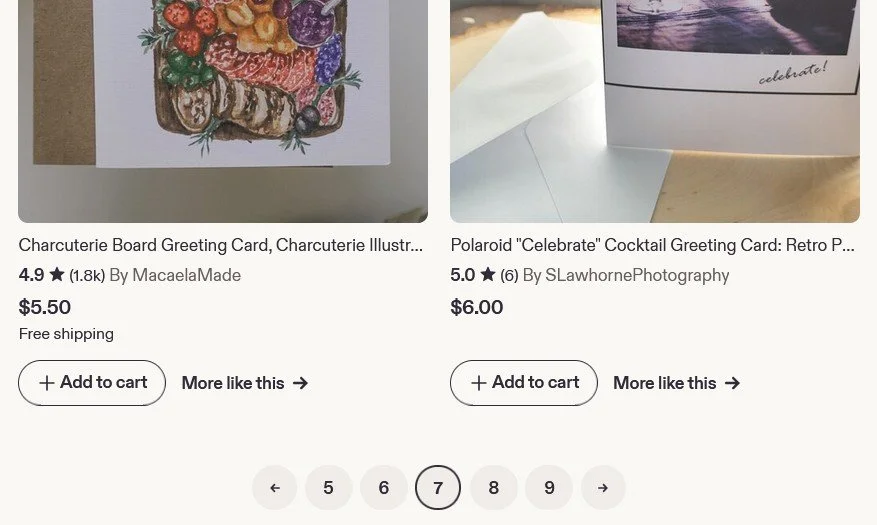
One of my cards, on page 7 of the search results.
Profitability.
During our meeting, the Etsy Expert advised me to spend 30% of the amount of income I want to make on advertising. I took her advice, and decided to advertise my items for $2 per day. I had noticed all the promoted listings in the search results, and thought that might improve my odds for making sales. To try to increase my conversion rate (the ads were pay-per-click), I made sure I had some great photos and descriptive listings. I did the best I could. And honestly, I did make a few sales using ads.
However, in the end, I found that I was losing money. Even when I made a sale, I ended up owing Etsy money at the end of the month. In the 13 months I operated my photography shop, I sold only 12 items. On the advice of the expert, my first few sales were from friends. This was a way of building trust for buyers who didn’t know me by getting some good reviews under my belt. In reality, only half of my sales were from people I didn’t know. So with less than one sale per month and all that money spent on ads, Etsy simply was not profitable.
What Next?
There are a lot of Etsy alternatives out there, and I don’t have enough experience with them to recommend one, though I have been working on starting up a shop on Handmade.com. My plan is to try that site out, but also to continue building my audience through email newsletters, social media, and my website. I will be adding new products to my website and launching a new collection this summer. I feel confident that leaving Etsy was the right choice. With a little luck and a lot of hard work, it is possible to sell art without it.